

What Does a Business Consultant Do
Most business owners hit a wall — stuck in survival mode, unsure how to scale. The worst part? Every wrong move costs time, money, and energy.
A business consultant steps in analyzes your operations, and crafts strategies to fix bottlenecks, boost profits, and drive growth. Let’s break it down.
The Role of Business Consultants
Running a business is like juggling knives — one wrong move, and things fall apart. That’s where a business consultant comes in.
A management consultant analyzes your business operations, spots inefficiencies, and crafts custom strategies to unlock growth. They bring expert advice you can’t Google, solving problems you didn’t even know existed.
I double a business’s profits just by streamlining processes or fixing a broken sales funnel. If you’re unsure whether you need one, check out these Signs if you need a business consultant. And if you’re curious about the impact they can make, read Benefits of hiring a business consultant — you might be one conversation away from a breakthrough.
Types of Business Consultants
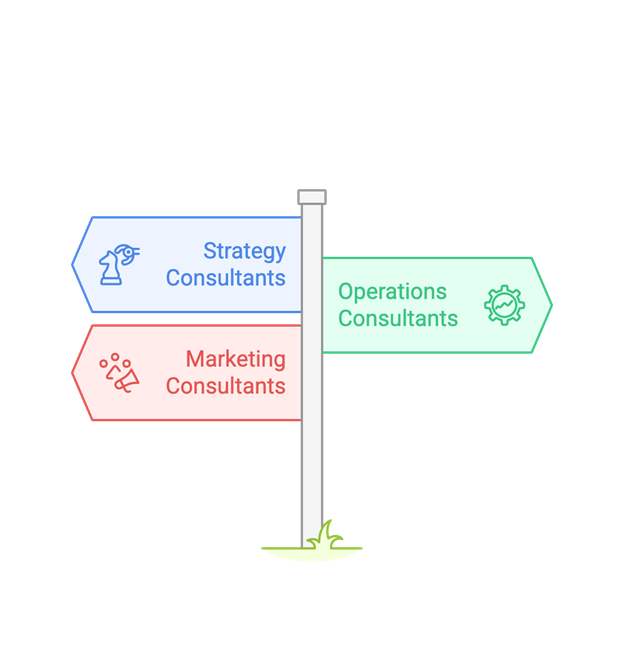
Strategy Consultants
If you’re throwing darts in the dark, hoping to hit your business goals, a strategy consultant flips on the lights. They don’t just create a business strategy — they reverse-engineer success. They map where you are, where you want to go, and exactly how to get there.
Need to break into a new market? They’ll design a creative solution tailored to your industry.
Stuck scaling? They’ll audit your current approach, cut dead weight, and build a leaner, more profitable model.
Operations Consultants
Operations are the backbone of your business — but what if the spine is misaligned? An operations consultant dives into your business processes, optimizes your supply chain, and fortifies your systems against threats with risk management strategies.
I’ve turned chaotic fulfillment centers into streamlined machines, cutting costs and boosting output. If you’re curious about how we do it, check out How business consultants solve operational challenges for real-world examples.
Marketing Consultants
No market, no money. A marketing consultant connects you to the right audience and builds strategies that drive revenue. They use their industry connections to unlock collaboration opportunities and leverage hands-on experience to refine your messaging.
Core Responsibilities of a Business Consultant
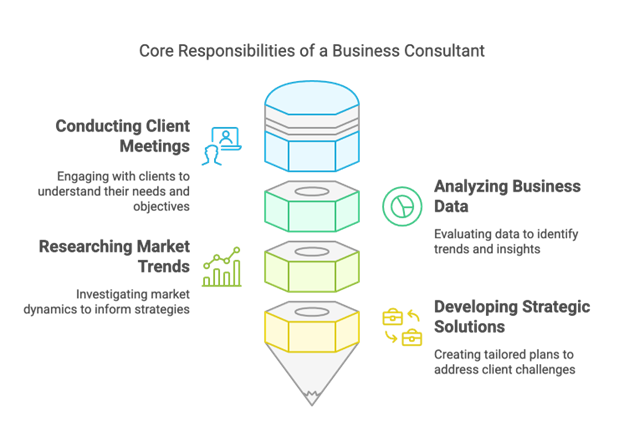
Conducting Client Meetings
If you can’t command the room, you’ve already lost. Client meetings are more than calendar invites — they’re moments to showcase executive presence. A great consultant doesn’t just talk; they listen. They read between the lines, understand unspoken concerns, and use soft skills to build trust.
The best in the game don’t operate solo either — they leverage a strong network to bring in specialists, making the client feel like they’ve hired an entire army of experts, not just one person.
Analyzing Business Data
Numbers tell stories — but only if you know how to read them. Business consultants dive into Business Analytics to decode patterns and spot leaks in business performance. For instance, a company bleeding cash might not need more sales but better financial management.
I’ve saved struggling businesses just by refining their cash flow strategies. (If you want to tighten your finances, check out cash flow management strategies for practical tips.)
Researching Market Trends
Markets evolve. Fast. A consultant who isn’t constantly researching trends is playing yesterday’s game. They scan a wide range of data points, competitor strategies, and consumer shifts to build future-proof business plans.
Want a structured approach? Use tools like PESTLE analysis to break down external factors, or dig into the importance of market analysis for small businesses to make sharper decisions.
I’ve watched businesses double their revenue just by pivoting early to meet an emerging trend — that’s the power of market insight.
Developing Strategic Solutions
Strategy isn’t brainstorming. It’s war-gaming. A top consultant dissects problems, tests creative solutions, and builds roadmaps aligned with the company’s business strategy. They act as a bridge between vision and execution. And they don’t just give advice and bounce — they stick around to make sure the plan works. It’s management consulting at its core: solving chaos with clarity and turning ideas into bottom-line results.
Essential Skills to look for in Business Consultants
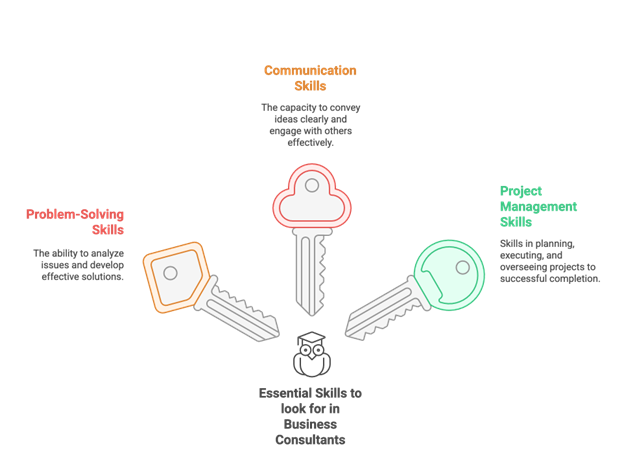
Problem-Solving Skills
If a consultant can’t solve problems, they’re just a glorified notetaker. Businesses don’t pay for observations — they pay for answers. A top-tier consultant dives into consulting projects like a detective, breaking down business challenges piece by piece. And they don’t settle for surface-level fixes. They craft creative solutions that tackle root causes, not just symptoms.
I’ve saved companies from collapse by identifying hidden risks and implementing proactive strategies. If you’re worried about vulnerabilities, you need to learn how to protect your business assets — it’s a game-changer for safeguarding what you’ve built.
Communication Skills
You can have the best ideas in the world, but if you can’t explain them, they’re worthless. Successful consultants master soft skills and know how to command attention with executive presence. It’s not just about talking; it’s about translating complex concepts into simple, actionable steps. They know how to build rapport, ask the right questions, and tap into their strong network for insights when they don’t have all the answers.
Project Management Skills
Chaos kills businesses. That’s why consultants need ironclad project management skills to bring order to the madness. From streamlining business processes to balancing risk management, they ensure everything runs like clockwork. But here’s the kicker: great consultants know that change is inevitable. They don’t resist it — they plan for it.
Adapting to evolving business operations is a skill in itself, and if you want your business to survive during transitions, understanding Benefits of change management is non-negotiable.
Selecting the Right Business Consultant
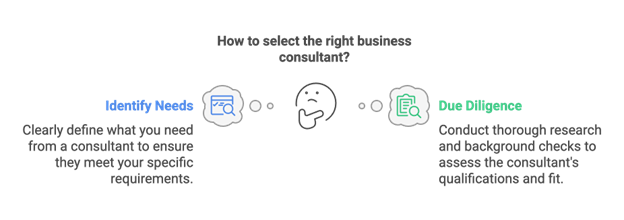
Identifying Specific Needs
Most businesses screw this up — they hire a consultant without even knowing what they need. It’s like seeing a doctor and saying, “I feel bad.”
If you can’t define your business goals or pinpoint broken business functions, how can anyone help you?
Start by narrowing it down: Are you bleeding cash flow? Then maybe a financial consultant makes sense. Need a growth strategy? You want someone who lives and breathes scaling.
If you’re unsure, check out How to choose the right business consultant — it’ll save you from wasting thousands on the wrong fit.
Due Diligence in Selection
Not all consultants are created equal. And trust me, flashy titles mean nothing if they don’t have real-world experience. You want someone with industry connections, a proven track record, and relevant certifications — not someone who just recites business books.
- Ask for case studies.
- Call past clients.
- And don’t ignore fees.
I’ve seen people overpay consultants who deliver generic strategies you could Google. Learn what’s fair by exploring a business consultant fees so you can spot overcharges (or worse, underpriced amateurs).
Picking the right consultant is like choosing a business partner — choose the wrong one, and it could cost you everything.
Measuring the Success of a Business Consultant
Key Performance Indicators (KPIs)
If your consultant isn’t moving the needle, why are you paying them? You need to track the right metrics to see if they’re actually driving results. Start with Revenue Growth — are sales climbing, or are you just getting fluff strategies? Then dig into Profit Margins. More revenue means nothing if costs skyrocket. Customer Acquisition Cost (CAC) and Lifetime Value (LTV)? Non-negotiable. If your CAC isn’t dropping or LTV isn’t increasing, something’s broken.
Also, check Cash Flow Stability — no business survives long on paper profits. And don’t sleep on Employee Productivity or Operational Efficiency. If your team isn’t performing better, what’s the point? Need help setting these metrics? Read how to improve business performance for practical KPI tracking tips.
Client Feedback and Satisfaction
Here’s a hard truth: if your team dreads consultant meetings, that’s a red flag.
Successful business consultants don’t just deliver results; they build trust. You should get regular check-ins, not just a deck of vague recommendations. Ask your team: Is the consultant solving your business challenges? Are they leveling up your consulting skills as a business owner?
And here’s the kicker — look at Customer Retention Rates. If customers are sticking around longer, that’s a sign the consultant’s strategy works. For more ways to measure success, check out Critical success factors for SMEs to benchmark your progress.
Bottom line: a great consultant isn’t just a cost — they’re a multiplier for your business growth.
FAQ
What is the role of business consultants?
Business consultants solve problems, optimize processes, and drive growth. They step in, diagnose issues, and create strategies to hit your business goals faster.
What does a business consultant help with?
Anything blocking your business from scaling — from fixing cash flow issues to refining marketing strategies. They help with business strategy, financial management, market analysis, and operational efficiency.
What does a business consultant do daily?
They analyze performance metrics, meet with stakeholders, research market trends, and design actionable strategies. Their day is split between understanding your problems and building the roadmap to solve them.
What qualifies you to be a business consultant?
Proven experience, real results, and deep knowledge of business functions. Many have degrees in business or finance, but the real qualification? A track record of helping businesses grow and thrive.
Coaching 4 Companies (a division of Skills 4 Executives Limited)
Taking you to the next level
At Coaching 4 Companies we empower businesses and executives to achieve real performance improvement, sustainable growth, and lasting value, transforming their happy clients into lifelong brand ambassadors.
Real Performance
Real Growth
Real Value