

Small Business Ideas Australia
Starting a small business in Australia sounds exciting—until you realize most fail due to poor planning and market misalignment. Without the right idea, you risk wasting time and money. In this guide, I’ll break down profitable business ideas and exactly how to start.
Identifying Profitable Sectors
If you’re going to start a profitable business in Australia, you need to be in a sector where demand is strong and startup costs make sense. The key? Picking industries where clients already pay for solutions—not trying to convince people they need something new.

Professional Services
You don’t need a flashy startup idea—you need a business model that works. Professional services thrive because businesses and individuals will always pay for expert advice they don’t have in-house.
- Accounting & Bookkeeping – The demand for accountants in Australia is skyrocketing, with the profession consistently ranking among the top 10 most in-demand occupations (annamoney.au). If you have financial expertise, you don’t need to build a massive firm—you need 5–10 potential clients paying premium fees.
- Consulting – Business owners pay consultants to fix what’s broken—whether it’s marketing, operations, or strategy. The key? Specialize. A general business consultant is a commodity, but a consultant who helps real estate agents scale to 7-figures can charge whatever they want. (https://coaching4companies.com/blog/how-business-consultants-solve-operational-challenges/ explains how consultants help professional service businesses streamline operations.)
Health and Wellness
The health and wellness industry isn’t just booming—it’s recession-proof. People will cut a lot of expenses before they stop investing in their health. The trick? Target busy professionals.
- Personal Training Business – The average personal trainer in Australia can charge $60–$100 per session or more if they offer specialized training (kcwebdesign.com.au). Want scalability? Skip 1:1 sessions and package your expertise into group coaching or digital fitness programs.
- Corporate Wellness Coaching – Companies are throwing money at employee wellness programs. Instead of chasing individual clients, sell wellness coaching to businesses—they have the budget, and they care about productivity.
E-commerce
People think e-commerce means selling physical products, but the real money is in digital products and online businesses with low overhead and high margins.
- Digital Products – Selling online courses, templates, or ebooks means no inventory, no shipping headaches, and 80–90% profit margins. Unlike physical products, you create once and sell forever.
- Niche Online Business Ideas – Generic dropshipping stores are dead, but hyper-targeted stores thrive. Instead of “selling t-shirts,” sell eco-friendly surf gear for Australian surfers. Find a niche, own it, and build an audience that trusts you. (Top business trends for small businesses cover the latest shifts in e-commerce and small business growth.)
Construction
Think construction is only for big companies? Wrong. Some of the most profitable businesses in Australia come from small service-based construction businesses that business owners and homeowners rely on.
- Renovation & Home Improvement – With a massive interest in home upgrades, Australians are spending big on kitchen remodels, outdoor living spaces, and energy-efficient solutions (forbes.com). The play? Specialize. Instead of “home renovations,” dominate one high-ticket service (e.g., “luxury bathroom makeovers”).
- Mobile Construction Services – Think beyond full-scale projects. Mobile businesses like onsite welding, tiling repair, or eco-friendly painting services have low startup costs and high demand. Own a niche, market it well, and people will find you.
The key takeaway? Don’t pick a business idea based on what sounds cool. Pick one where people are already spending money—and make sure your business model aligns with demand, pricing, and scalability.
Innovative Business Concepts
The best businesses aren’t about reinventing the wheel—they’re about identifying inefficiencies and solving problems faster than anyone else. If you want high profits with low startup costs, these innovative ideas have serious potential.
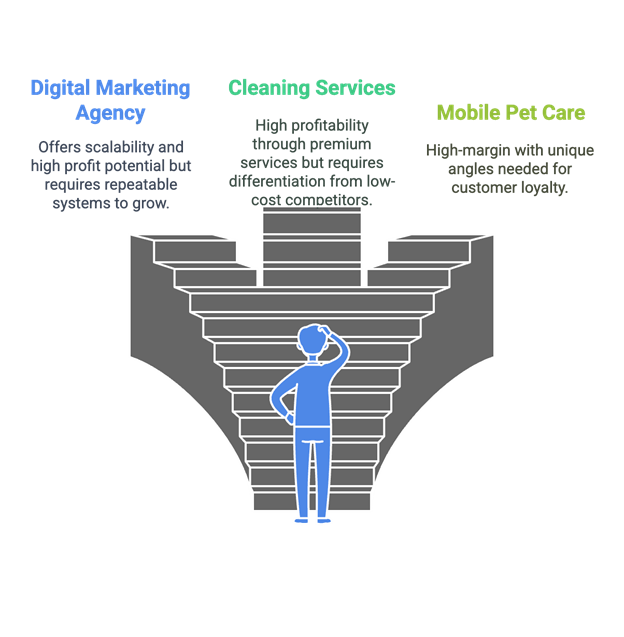
Digital Marketing Agencies
Most businesses don’t understand how to market themselves online—but they know they need to. That’s where a digital marketing agency comes in. You help clients get more leads, rank higher on Google, and convert visitors into customers. The best part? It’s scalable. You can start alone, then build a team.
But here’s the problem: Most digital agencies never grow beyond a handful of clients. Why? They don’t have a repeatable system. If you want to scale, you need processes for onboarding, client reporting, and lead generation—otherwise, you’ll burn out. If you’re serious about this, here’s a guide on how to scale a business that breaks it all down.
Cleaning Services
The cleaning industry isn’t sexy, but it’s ridiculously profitable. Why? Because people hate cleaning. Whether it’s homes, offices, or Airbnb rentals, busy professionals will pay a premium for convenience.
The mistake most cleaning startups make? They compete on price instead of service. If you’re just another low-cost option, you’ll get buried. But if you position yourself as a premium mobile service with customized cleaning plans and eco-friendly products, you attract higher-end clients who stick around. Want proof? Even small operational tweaks can massively impact profitability. Here’s how to improve business performance in service-based businesses.
Mobile Pet Care
Pet owners spend big money on their furry friends—especially on convenient services. Mobile pet grooming, pet sitting, and delivery-based pet products are all high-margin, low-overhead businesses you can start with minimal investment.
But if you want real success, you can’t just be “another pet sitter.” You need a unique angle—like specializing in anxious pets, hypoallergenic grooming, or subscription-based pet care. If you offer something no one else does, customers won’t just hire you—they’ll stay loyal.
Home-Based Business Opportunities
The biggest misconception about starting a business? You need an office, a team, and a lot of money. That’s false. Some of the most profitable businesses today started from a laptop at home. If you can deliver value remotely, you can build a business from anywhere. Here’s how:
Tutoring Services
The online education industry is projected to hit $457.8 billion by 2026. That’s because people pay for results. If you can help someone pass an exam, learn a skill, or improve in a subject, you can charge a premium.
But most tutors make one big mistake—they rely on word of mouth. That’s not a business strategy. To grow, you need an online presence. Build a website, create social proof with testimonials, and offer free resources to attract potential clients. And don’t just focus on students—business owners also need tutoring in areas like language skills, software training, and finance.
Want more home-based business ideas? Here’s a full breakdown of home business ideas in Australia.
Freelance Writing
Business owners need content—blogs, emails, website copy, and social media posts—but most can’t write effectively. That’s why freelance writing is in high demand. The problem? 90% of writers compete on price instead of value.
If you want high-paying clients, specialize. Are you an expert in tech, finance, or health? Can you help brands with SEO or content marketing strategy? Writers who offer more than just words make more money.
Want to stand out? Leverage LinkedIn. Unlike Upwork or Fiverr, where you fight for scraps, LinkedIn attracts serious business owners willing to pay premium rates. Share your insights, engage with industry posts, and position yourself as the go-to expert.
Drop Servicing
Most people hear “online business ideas” and think of dropshipping. But what if you could make money without holding inventory or dealing with product logistics? That’s drop servicing. Instead of selling physical products, you sell services—then outsource the work.
For example, you market web design services, but instead of doing the work, you hire a virtual assistant or a freelancer to complete the project. Your job? Find high-paying clients and manage the process.
The key is choosing a high-demand service—video editing, lead generation, content writing, etc. Done right, you can build a business with minimal investment.
Want to launch this model the right way? Here’s how to start a business in Australia and navigate the setup process.
Trends Influencing Small Business Growth
If you want to start a business in 2025 and beyond, you need to follow the right trends. Timing matters. If you jump into dying industries, you’ll be fighting an uphill battle. But if you position yourself in front of demand, growth is inevitable.
Demand for Expertise
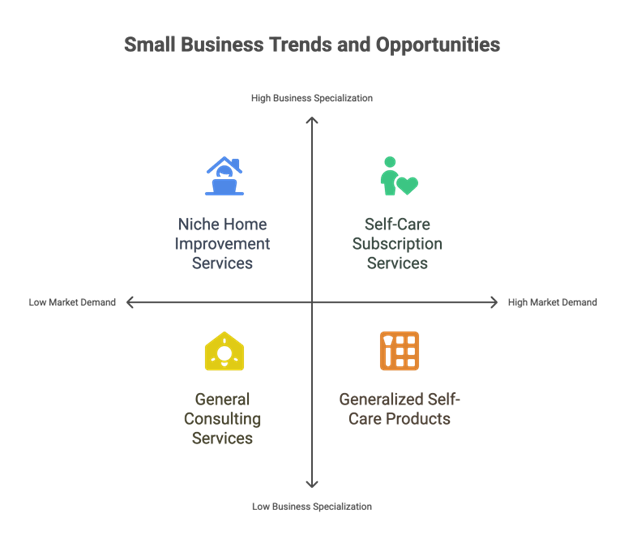
Here’s the truth: Business owners don’t have time to figure everything out themselves. That’s why consultants, coaches, and specialized service providers are in high demand. If you have expert advice that solves real problems—whether it’s marketing, operations, or financial planning—there’s a market for you.
The problem? Most experts aren’t good at selling their expertise. They undervalue their knowledge and struggle to land high-paying clients. The fix? Position yourself as a problem solver, not just an information provider. When a business owner realizes they’re leaving money on the table, hiring you becomes a no-brainer. If you’re wondering whether businesses actually need outside expertise, here are 8 signs it’s time you need a business consultant.
Increase in Self-Care Products
The self-care industry isn’t just growing—it’s exploding. Consumers, especially busy professionals, are spending more on digital products, personal training businesses, and wellness services than ever before.
The opportunity? Subscription-based wellness. If you’re selling one-off self-care products, you’re missing out on recurring revenue. Imagine instead of selling a $30 digital fitness guide once, you sell a $30/month membership with workout plans, accountability check-ins, and personal trainer support. That’s how you build a sustainable business.
Interest in Home Improvement
Homeowners and real estate agents are investing in renovations—not just to increase property value but to create more functional living spaces. And they’re looking for specialized services, not generic solutions.
The mistake new home improvement businesses make? Trying to do it all. You don’t want to be “just another contractor.” You want a niche. Maybe you specialize in kitchen remodels for Airbnb properties or focus on turning home offices into high-performance workspaces. When your business structure is clear, clients see you as an expert—not just a service provider.
Importance of Strategic Planning
Most businesses don’t fail because of bad ideas—they fail because of bad execution. And bad execution usually starts with zero planning. If you don’t understand your market, business model, and finances, you’re setting yourself up for failure. Let’s break this down.
Understanding Market Needs
Want to know the fastest way to lose money? Create something no one wants. Too many entrepreneurs get obsessed with their idea instead of their target market. The result? They spend months (or years) building a product or service that doesn’t sell.
So how do you avoid this trap? Simple: talk to potential clients before launching.
- What problems do they have?
- What are they already paying for?
- What do they wish was different?
If you’re not collecting real-world feedback, you’re guessing. And guessing isn’t a strategy. Before investing time and money, make sure there’s demand. (Want to go deeper? Here’s why market analysis is critical for small businesses.)
Creating a Business Plan
Most people think a business plan is a boring 30-page document no one reads. That’s because most business plans are useless. A real business plan isn’t about impressing investors—it’s about creating a roadmap for execution.
Ask yourself:
- How will this business make money? (Your business model.)
- How much will it cost to get started? (Your startup costs.)
- What legal structure makes sense? (Your business structure.)
If you can’t answer these questions clearly, you’re not ready. A plan isn’t just a formality—it’s the difference between winging it and actually making money. (Want a step-by-step breakdown? Here’s how to write a business plan in Australia.)
Financial Management Strategies
Here’s the harsh truth: It doesn’t matter how much revenue you make if your cash flow sucks. Most businesses don’t fail because they don’t make sales—they fail because they run out of cash.
What’s the fix?
- Keep fixed costs low. Avoid unnecessary expenses when starting. If an office isn’t critical, don’t rent one.
- Focus on cash flow, not just revenue. If clients pay you in 60 days but you have bills due in 30, you’re in trouble.
- Only reinvest after you’re profitable. Too many businesses try to scale before they’ve mastered profitability.
Smart financial management is the difference between staying in business and going broke. Need tactics to stay cash-flow positive? Check out these cash flow management strategies.
Navigating the Australian Business Landscape
Starting a business isn’t just about having a great idea. You need to understand the rules, build the right connections, and leverage online tools. If you don’t, you’re just winging it—and that’s how businesses fail. Let’s break it down.
Regulatory Considerations
Here’s a reality check: Compliance isn’t optional. And yet, too many entrepreneurs ignore it until they’re hit with fines—or worse, lawsuits. Before you even think about launching, ask yourself:
- What’s the best business structure for me? (Sole trader? Partnership? Company?)
- What licenses or permits do I need? Different industries have different legal requirements.
- How will I protect my assets? If your business gets sued, can they come after your personal finances?
Mess this up, and you could lose everything. Don’t risk it—take the time to set up your business the right way. (Want to protect what you’re building? Here’s how to handle business asset protection.)
Networking and Community Resources
You know what’s underrated? Who do you know? Connections can open doors that money can’t buy. And in Australia, there’s a massive network of business owners, real estate agents, and industry experts who can help you grow—if you put yourself in the right rooms.
Where should you start?
- Chambers of Commerce – Every major city has one. These events are goldmines for meeting serious business players.
- Co-working Spaces – Great for networking without forced small talk. Plus, you get access to marketing materials, mentors, and workshops.
- Local Business Groups on LinkedIn & Facebook – The right online groups can connect you with potential clients and partners.
If you’re trying to build something big, stop working in isolation. Surround yourself with people who are already where you want to be. The fastest way? Join a structured coaching program where you don’t just learn—you network with other business owners in live coaching calls. (See how our Group Coaching Program can help you grow.)
Online Solutions and E-Commerce
It’s 2025—if your business doesn’t have an online presence, you’re invisible. And no, a Facebook page isn’t enough.
What should you focus on?
- A real website. It builds credibility and works as your 24/7 sales rep.
- E-commerce & digital products. Whether you’re selling physical products, affiliate marketing, or running food trucks, the right online strategy can scale your revenue.
- Automation. Online businesses thrive on systems. Use tools to handle payments, email marketing, and customer inquiries without lifting a finger.
Your goal? Make it ridiculously easy for people to buy from you. The businesses that do this right? They don’t just survive—they dominate.
FAQ
What is the most profitable small business in Australia?
Businesses with low overhead and high demand make the most money. Think accounting, bookkeeping, digital marketing, and consulting—especially in industries like finance, law, and IT. People pay top dollar for expert advice.
What is the best business to start with $1,000?
Anything service-based. Freelance writing, social media management, tutoring, consulting. You don’t need inventory, a storefront, or a team—just skills, a laptop, and clients willing to pay.
What business would you start with $10,000?
Buy something that makes money immediately. A vending machine route, a small Airbnb rental, or an e-commerce brand using dropshipping and private labeling. Put cash into marketing and automation so it grows fast.
What is the cheapest, most profitable business to start?
Selling knowledge. Online courses, coaching, consulting—pure profit, no inventory, no overhead. Teach what you already know, package it as digital products, and sell it to an audience that needs it.
Coaching 4 Companies (a division of Skills 4 Executives Limited)
Taking you to the next level
At Coaching 4 Companies we empower businesses and executives to achieve real performance improvement, sustainable growth, and lasting value, transforming their happy clients into lifelong brand ambassadors.
Real Performance
Real Growth
Real Value