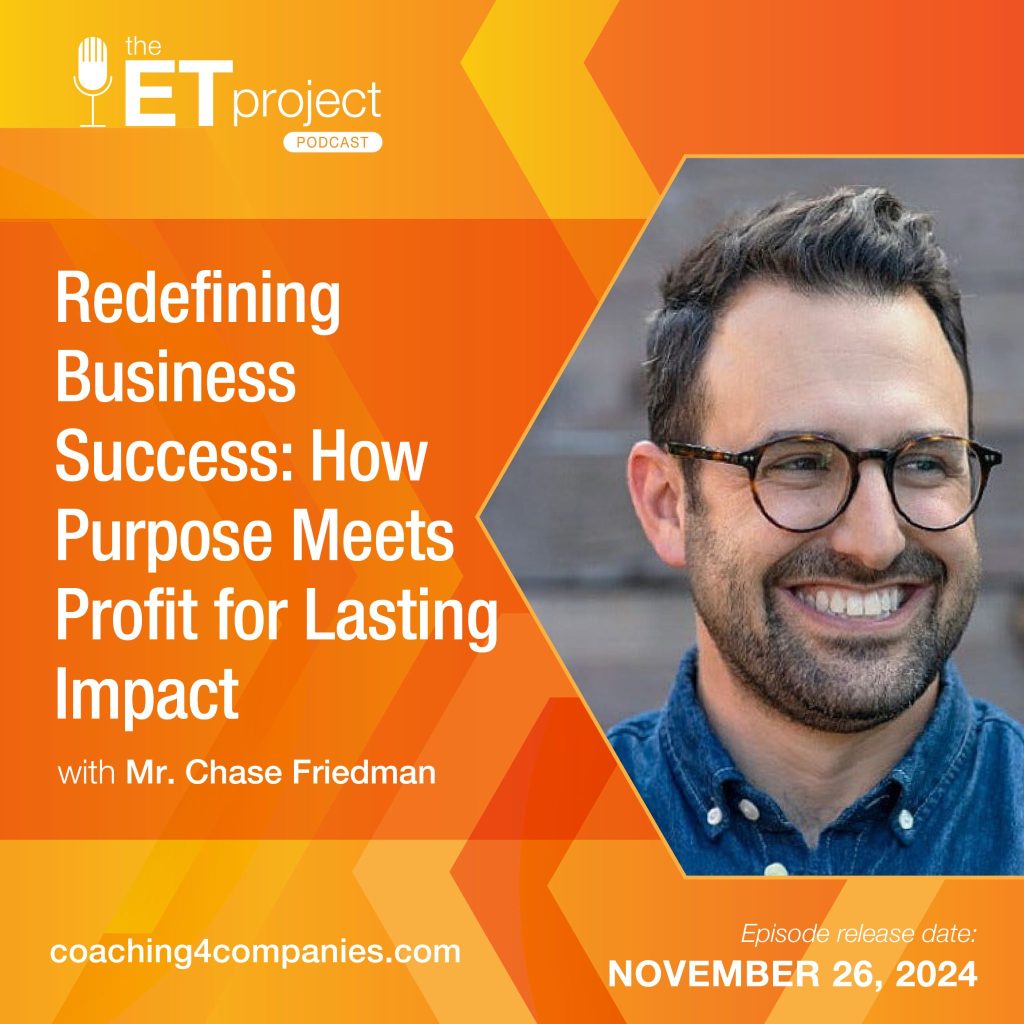
0:00:05.2 Wayne Brown: Hello, I’m your host Wayne Brown and welcome to the ET Project. We’re delighted to be delivering this podcast for executive talent all over the world, whom we’re affectionately referring to as Team ET. Today we’re heading to Manhattan Beach, Los Angeles to chat with Mr. Chase Friedman. Chase is a brand strategist, coach and founder of Vanquish Media Group, a boutique digital media collective that collaborates with world-renowned brands, thought leaders and digital influencers by championing premium branded content, digital storytelling and integrated marketing strategies. Spanning multiple platforms and genres, including entertainment, lifestyle and education, Vanquish has launched over 100 branded content campaigns that have generated over 50 million in e-commerce revenue. But it hasn’t always been this way.
0:00:58.3 WB: Chase moved to Los Angeles from South Florida some 14 years ago to pursue a career in filmmaking and found himself rising through the ranks from lowly production assistant to independent director producer and everything in between. It was his de facto film school where he gained exposure to every aspect of the production process from prep to post and where he fell in love with storytelling and the creative process. After several years wavering between starving artist and fledgling commercial director, Chase went corporate for the first and last time. Fast forward to today and Chase still believes telling stories is in his DNA, albeit now that stories relate to brands, products, entertainment and services. Team, in this episode, you’ll learn about conscious capitalism where passion, purpose and clarity take center stage and the aim is to do good and do well in the process. Sit back and get ready to enjoy this great conversation.
0:02:00.9 Speaker 2: Welcome to the ET Project, a podcast for those executive talents determined to release their true potential and create an impact. Join our veteran coach and mentor, Wayne Brown, as we unpack an exciting future together.
0:02:19.2 WB: Hello team, to what promises to be another engaging episode where we’re gonna dive into the world of conscious capitalism. Yes, you did hear me right, conscious capitalism. It’s a movement that aims to redefine the essence of business by balancing profitability with societal impact. So you can imagine this is gonna be an interesting conversation. It’s a world where business have an opportunity to do good and do well and through this practice, unlock their best potential or their greatest potential for growth and impact in the lives of their customers, communities, and in fact, everyone in the world. So we’ll explore how this philosophy engages and encourages organizations to operate ethically, prioritize stakeholder wellbeing and drive sustainable growth. Now, additionally, and in support of this, we’re gonna shed some light on our guest’s three phase brand strategy framework. So as always, I’m not providing the solutions. We’ll be doing that with the guidance of our branding specialist and strategist and expert, Mr. Chase Friedman. Chase, welcome to the ET Project. Great pleasure to have you join us for the conversation.
0:03:37.0 Chase Friedman: Thank you, Wayne. It’s great to be here. And as you’re saying it, introducing it to the audience, what a world, right? What a world that might be where businesses can do and do well. So it’ll be fun to dive in.
0:03:50.0 WB: Conscious capitalism. I like that.
0:03:50.3 CF: Yeah. Amen.
0:03:50.6 WB:[0:03:50.7] ____ Is that yours or does that come from somewhere in the past?
0:03:55.4 CF: No, I wish. I think a lot of these terms were probably coined by people far, far smarter than myself. But look, at the end of the day, I think this is kind of like branding, right? Some of that repetition is needed to kind of get into societal cultural consciousness and reframe the way we think about capitalism.
0:04:15.1 WB: Well, let’s look at the scene a little bit, Chase. You don’t come from the marketing world per se. You come out of the film industry, I believe. So you’re a storyteller at heart. I wonder if you wouldn’t mind sharing a little bit about the journey that’s led you to starting Vanquish Media Group.
0:04:37.4 CF: Yeah, as you mentioned, it certainly hasn’t been a linear journey or an expected one. But myself here, it’s a pretty great reality. So yeah, my original start of my career, since I was a young kid, I always dreamed about making movies, telling stories. And really, I think it was more about the impact you can have on an audience, right? Emotional resonance, to laugh, to cry, to feel something, to be moved by something. I remember feeling that as a kid in the cinema. And so I grew up in a small town in Florida where that wasn’t accessible. I moved myself out to California. Really worked my way up through the ranks. School of hard knocks, as I like to call it. And I think that’s been kind of the common theme throughout my career. Where there’s been a lack of, let’s say, sort of formal training and or education, I think the best kind of practice and experience is getting your hands dirty, getting in the trenches and learning it.
0:05:29.2 CF: So working my way up in the film industry, working in independent film, television, for many, many years as a writer, as a director, as a producer, it was my passion, it was my purpose. And storytelling has always been very much in my DNA. Unfortunately, the business side of the entertainment industry really wasn’t resonating. It’s a pretty brutal business to be in. And so there was a conflict, right? I was chasing my dream, but it didn’t feel value aligned to me in terms of where I wanted to go in my career. So I knew I had this love for storytelling, but it might not have been deployed in the traditional means of entertainment and media. That’s kind of when I began to start working for and really being requested by brands and organizations to help come in and consult with them on how to tell their stories.
0:06:21.6 CF: Brand storytelling, which in and of itself has taken many iterations over the years. But it’s a different application of storytelling and just obviously delivering it to an audience that is still seeking something. Seeking how to overcome a challenge, an aspirational transformation. And if you can move people through a brand, a product, a service emotionally, I think that’s the ultimate way to stand out in the marketplace and build raving fans for a brand. So what started with consulting kind of snowballed into starting a full service brand and marketing agency. We still get to do a lot of creative, which scratches that itch. But it’s certainly not the film and TV that we once used, but it certainly is helping brands resonate much more authentically with their consumers through the art of storytelling.
0:07:13.3 WB: When I look at your website, you have a tagline that says profit with purpose. And this brings a different dimension to the whole dynamic of not just telling a story, but doing it with some sort of intent with purpose and doing it in a way that is beneficial, not just for the company, but for everybody. So where did that concept originate from?
0:07:37.3 CF: Really, it’s an extension of my values and my purpose. My purpose in my career and in life is to help others unlock theirs so they can build a life and business of their dreams. My superpower happens to be in branding and marketing, but the world has enough brand agencies, marketing agencies. What was gonna be my differentiation in the space? What was gonna be our unique perspective in this world? And that speaks to our mantra and our values, both personally and professionally, is that purpose and profit shouldn’t be mutually exclusive. They can coexist. I simply believe that there is a pursuit for me and hopefully for clients that we work with to do good and do well. Because I have seen it time and again, really prove itself. If you are gonna spend the amount of time and energy and resources that you do building a business or an organization, why not do it for something bigger than yourself and leave a lasting impact and legacy. So that really, profit with purpose is our way of storytelling who we are and what we believe in as a company.
0:08:46.8 WB: Right. What are some of the benefits that you observe when companies can get this alignment, let’s say, between values and what their stakeholders are driving for?
0:08:58.1 CF: Yeah, look, there’s been legacy to organizations that have proven this time and again. You get the Fortune 100 companies like Unilever, like Patagonia, like Salesforce, which a lot of people don’t think of in terms of a purpose-driven organization. Very core to Marc Benioff’s sort of mantra in terms of how he started the company. These companies have continued to reinvest in purpose and impact-driven initiatives, which I believe has allowed them to innovate in their own way and build brand loyalty and equity and trust over many, many years. But that also exists for small businesses. Today, we are on this, it’s not a trend, it’s a movement, where this form of conscious capitalism, of stakeholder-driven capitalism is putting hands in the consumers and the power of the consumers and the employees and the investors behind these companies that are demanding that these companies stand for something more than just a single bottom line.
0:10:02.2 WB: Right.
0:10:02.6 CF: So it is overwhelming the amount of people that are willing to buy from, work for, invest in companies that align with their values or are committed to impact. And in this sort of sea of sameness, where there’s so many competitors that it almost becomes commoditized, and only one or two can really win in your four P’s, price or product what else is left to differentiate yourself? So not only is it something that is, I believe, something that you should aspire to do as a business, but it is actually creating a strategic advantage in the marketplace, allowing you to signal what you believe in your values to attract those like values with your super consumers, with your tribe. Employee the best and brightest recruitment of employees that want to come work for you.
0:10:53.4 CF: Nowadays we’re in this millennial dominating the workforce. But can you imagine when Gen Z starts to dominate, and they are so much more emotionally charged and driven? There’s incredible statistics that obviously, people are willing to take less pay for a company that aligns with their values and helps them feel fulfilled in their purpose. Three in four consumers are willing to pay a price premium for a brand or product that aligns with their values. So market, margin, employee retention, innovation, collaboration, it does all these wonderful things for a business beyond just feeling good.
0:11:30.2 WB: I’ve often asked myself the questions from my career when I work with different companies, that the whole process of identifying your values and aligning with those values as a corporate entity, for me, there’s this question mark about how authentic are the values ever gonna be. Because we’re trying to attract an audience by stating a value that in some way is how it comes off in many cases. In your case, when you work as a CMO, where you go in as a fractional CMO with companies, is there a specific approach that you have for building their values or identifying their values and really flushing out how authentic these are gonna be?
0:12:17.8 CF: Well, yeah, there’s two good questions in that. Where does it come from and how are you sort of walking the talk? There are certainly a lot of organizations out there that, unfortunately, are just checking a box. They’re value signaling, as we kind of call it, purpose washing or greenwashing, kind of more commonly known. Consumers are far more intuitive than that. They can see through the BS, so to speak, and they will call you on it. You don’t just value your signals when it’s convenient for you and when there’s sort of a hot button issue trending in the news. You do it 24/7, year-round, internally, externally. Where that comes from, I’m a firm believer it’s got to come from within. When I work with a client, whether it’s a solopreneur or a larger organization, I believe that personal development begets professional development especially for someone starting their own business. What is inside of you? What is that driving force? What is your why? Why you do what you do, what you believe in that is inspiring you to run this business beyond the bottom line? So when you’re looking at a larger organization, the best place you’ve got to start is within your own ranks. Not looking at what the audience you think your customer is gonna like, but all stakeholders from the top on down to the bottom. You get a lot of this sometimes what we call purpose paradox.
0:13:44.2 CF: So you might have a C-suite adopt this well-sounding and even well-intentioned purpose, but if you run it down the flagpole to the people that are actually in the trenches, the employees, they wouldn’t be able to recite that for you if you put a gun to their head nor would they it’s that authentic. So again, making sure that you are listening to everyone in the organization, what lights them up, what do they believe in? And once you can get that right, only then is it appropriate, I think, to kind of then expand upon those values outwardly. But again, this is not talking the talk. This is not putting it on a social media post or on a campaign ad. You’ve really got to put time and attention and effort and resources into creating that impact. And there’s a variety of ways to do that. But again, that strategic purpose has got to start with a lot of vulnerability and being honest with why you exist as a company.
0:14:39.3 WB: I’m at the other end of the scale where I do a lot of facilitation work with the people in the trenches. One of the things we often say to them is, it’s so critical that you align your personal values with the company values. But when the company values are just writing on a wall that has no real authenticity behind it, then it’s all just a smokescreen. For those people that are joining companies, how do they flush out whether a company is genuine before they join the company?
0:15:13.5 CF: Yeah, look, you’ve got to look at the tangible impact. You’ve got to look at, is this company putting its money where its mouth is? What are their partnerships and their investments look like? Whether it’s a company that’s trying to improve on more sustainable practices to combat climate change or social injustice or community development, whatever that might be, what are they doing actively within the community around the world to commit to that? I don’t mean just kind of ESG reports. I mean, look at partnerships. A lot of these companies are partnered with nonprofits that align with values and help them really usher that impact to a greater scale. All these companies are investing and reinvesting in, let’s say, underserved communities to kind of help create shared value. By investing these underserved communities, they might be building the next wave of talented employees and team members. Again, I think it’s got to be more than what’s on the label, what’s on the packet, what’s on the mission statement that’s in the HR room. Dig a little bit deeper and really sort of examine how they are part of the solution and, most importantly, how consistently that’s been as part of their ethos. Is this a quarterly sort of trend for them that they’re jumping on? Or is this something that has really been as part of their code of values for as long as the company has been around?
0:16:41.9 WB: Based on all of that and what you’ve learned and developed over the years, you have this three-phase brain strategy or roadmap, which I’d like to go through in a little bit of detail, if you don’t mind.
0:16:55.4 CF: Sure. As I mentioned, starting from within, building from within, from the inside out, very similar to kind of our process and our approach, much like building a home. You need to build a home, not just on scaffolding, but a strong foundation. So our three phases are discovery, identity, and growth. Pretty intentional about the sequencing of that. Discovery is all about how we are developing and discovering the identity of a brand and of a business, whether it’s a new brand or a legacy brand, but really revitalizing that, developing and designing the brand identity, the messaging, the core values. It’s creating what we call a brand blueprint. And that’s very much an internal sort of playbook that a company should be operating on so that all of their functions are operating in sync and with consistency around those values and that purpose. And that’s great. But now how do we share that with the world? There comes identity.
0:17:49.8 CF: So what is the outward facing identity that we are sharing with our community, our clients and customers, the world at large? And that comes in the form of things such as obviously storytelling of content, that’s websites, that’s a variety of sort of visual and multimedia elements that take that brand blueprint and bring it to life. So that’s the identity phase. And then the third phase is obviously growth. Growth is where we’re kind of pouring fuel in the fire. How do we amplify that message to the world through a variety of digital marketing tools, tactics.
0:18:27.0 CF: But then, and only then, as you can imagine, I’m sure you… You get some clients like this, a lot of times clients come to us and they wanna skip ahead a few steps and get right to give me more than… Give me more revenue. Give me more followers. And you have to remind them to pump the breaks. And measure twice, cut once. You can throw a ton of money at a particular performance marketing campaign, but if you don’t have the other two pieces, the foundational pieces of that puzzle correct, but you’re inconsistent and compelling storytelling and messaging and identity, it’s gonna be diminishing returns on your investment. Some companies go kicking and screaming, Oh, we gotta do the whole branding thing. But if you invest in that early and often it will make a rest of your runway so much smoother and much more effective in reaching your desired customer. So that’s kind of the three-phase approach to it, we try to think as sequentially to that as we possibly can.
0:19:30.2 WB: One thing that jumped out when you were talking and introducing discovery phase, was you go and you work with the companies and you identify these values, I’m wondering, in your approach, how filtered through the organization is that discovery process of the values and of the things that the company stands for? Is that in your experience, do you find it still top down or is it becoming more holistic within an organization?
0:19:56.8 CF: We certainly try to make it as holistic as possible. I believe that you gotta have as many divergent and diverse perspectives at the table to look at it from all angles. It doesn’t make sense if you’re just talking to the single owner or founder or even C-suite. At that point, similar perspective and experience in education and life values, how can you really create a mixture, different lenses on what we’re trying to create here. And an image stress test, our hypothesis around different people in the organization. So what it looks like at the end, it might not be everyone in the organization that’s too many cooks in the kitchen, you can hone it in, but along the way, doing checkpoints, doing interviews with different people within the organization to see if we are trending in the right direction with the message we’re developing.
0:20:45.0 WB: Let’s do a little bit of a roleplay. And imagine on your new client, you’ve come to me, or we’ve invited you to come and help us work through this process, where would we start in the discovery phase? How would we kick the process off?
0:21:00.9 CF: Yeah, look, I’d like to start extremely simple. It’s definitely leveraging a combination of different kind of questions and insights, but it goes back to sort of the Simon Sinek golden circle. Why do you exist, how are you uniquely positioned and different to deliver on that why? And then what it is that you actually do and deliver on to satisfy the rest. But again, with why you exist as a company, what do you believe in, and then from there, you can extrapolate a heck of a lot of insights and content from that. We’ve developed entire content strategy based on those three core questions.
0:21:39.8 CF: And if you really think about it, your why is really sort of… If you’re looking at it, equating it to a customer journey or a funnel, your why kind of satisfies that initial awareness top of funnel, what’s gonna engage someone to kind of look and think and content play you as a potential business or solution. How. How you’re uniquely positioned and different unique to deliver on that why is all around positioning and that’s kind of getting into the middle of the funnel right, deeper [0:22:08.4] ____ consideration, and then what. What we actually serve and do and deliver on as a value solution, that’s kind of towards the end of the funnel. Conversion. So I like to compare it to an actual functional customer journey and seeing how those three foundational questions, if you get them right, can really help guide messaging, content, tactics, tools at every stage of that buyer’s journey.
0:22:38.0 WB: You’ve opened up a whole Pandora’s box in my mind. I try to keep it as succinct as possible, but you’ve mentioned the customer journey, and this is something that I grew up with as well. How relevant is that still today in this digital world? Does it still play a crucial role?
0:22:57.6 CF: Yeah, it’s a good question. And the truth is, that’s a bit of a cheat, it’s an over-simplification. I don’t think it’s really that linear funnel, it’s more of like at best a flywheel, but really more realistically, the messy middle, there are so many nearly infinite touch points along that journey that can look different for just about every consumer. So while it’s certainly a broader approach to think about it in those phases, in those ways, it does help distill and simplify things. I’m a firm believer that… And look, we’ve done extensive brand guides and decks for clients. But the real true test is simplicity. If you can distill your message down to a single page, dare I say, a single sentence as a branch strategy. You know you’re doing something right. So we try to keep it simple, and yes, you can always add in different layers of complexity along the way, but starting with simple, clear, consistent messaging, not only for your internal team to recognize and remember and believe in, but something your customers will resonate with. It’s harder than it sounds.
0:24:16.6 WB: Alright. I had a guest, actually, I think it’s next week, the show was released, Timothy Hughes over in the UK, is a very big social selling, he talks about the brand… Now, the ambassadors to the brand is everyone in the company when they’re on social media, and I’m wondering how you find that and you deal with that when you’re working with companies, any business person, let’s say, is pretty much has a LinkedIn account. How does an manage that scattered approach and try and make it somehow succinct towards their brand?
0:24:55.6 CF: Well, you gotta be careful to not try to over-manage it because it’ll homogenize. But you’re absolutely right. It goes back to that sort of inside out process of brand identity and development. Your greatest ambassadors for your brand are gonna be the people within your own ranks, that’s why it’s infinitely important to, A, give them a seat at the table. When you were developing that. Make sure it is, it’s clear and consistent and connect with them on a deeper level, so it feels real, not just what sounds good, but empowering them through once again, walking the talk. Engaging them as part of that sort of promise and that purpose and that impact. Whether it’s promoting internal healthier employees or getting people out to do beach cleanup or whatever that might be. Getting people involved in your effort as a business and a brand to contribute to that purpose, I think that gives people a sense of fulfillment and camaraderie and contribution.
0:25:57.0 CF: So if you organize those elements correctly, I think there needs to be a degree of trust that your employees will sort of share those values outwardly with pride about the company that they work for.
0:26:12.5 WB: Right. I can imagine there’s a lot of challenges you encounter when you first move into an organization. Is there any common challenge you come across, you prepare yourself in advance. Okay. This is likely to come up. How do I deal with it? Do you find any specific challenges?
0:26:31.6 CF: Yeah, I mean look, honestly, my sweet spot, I really love working with entrepreneurs, solopreneurs, and small to medium-sized businesses because there’s so much versatility and agility is still there. I like working intimately with the founder or the owner or the executive team on these sorts of challenges. What I would say is the biggest problem there, and really in any size organization is mindset. Is kind of the block mindset in terms of their perceived expectations of what a brand should look and sound like, what they think the customer needs and expects and wants. So coming in with those preconceived notions, and quite frankly, if it’s your business and you’ve got a little bit of protective armor on, a pretty brutal landscape out there where it’s scary to truly wear your emotions on your sleeve, be vulnerable, share your story in an authentic way. And so that mindset shift, I think is critical and yet always challenging. The ability to be vulnerable, to really dig a little bit deeper and be honest with yourself, [0:27:42.8] ____ team around the good, the bad and the ugly, and then work to correct it, that’s tough. Not every leader is willing to go there.
0:27:52.5 WB: Yeah, for sure. Where do you see the future when it comes to brand strategy, marketing in general, given the prominence now with AI moving into everyone’s space. But where do you see that going with your area?
0:28:09.8 CF: Yeah, I mean look even more of a need to humanize your business as AI begins to kind of infiltrate and, and arguably sometimes take over even more slippage towards a more sort of homogenized, generalized brand speak. It’s a little bit clinical and it’s speaking to everyone and yet no one at the same time. It’s not a personal… So I think you got to be really, really careful how you balance that and preserve that human element. All of which goes back to that balance of finding profit and purpose.
0:28:43.8 CF: So I think businesses that are going to win ultimately long term and very immediately in this changing landscape are those that are actively making strides, regardless of market condition, good or bad quarter, committed to a greater impact. And I do believe that that is going to give them staying power. It is going to build brand trust and loyalty over the long term. And you’re going to see some of these businesses that are a little bit more self serving, singular bottom line focus, start to fall by the wayside and lose that customer trust.
0:29:19.4 CF: I’m not going to name names, but we’re already seeing it happen on a variety of fronts. Now some you could say are too big to fail, but we’ve seen big giants fail before. It could take some time, but I do believe the way things are moving as Gen Z is going to dominate the workforce in the next few years. Especially and the consumer market, it is going to mandate these companies to really step up for something bigger and if you’re not prepared to do so, you’re going to get left in the dust.
0:29:50.9 WB: Is there a starting point that they can go to, to start that process to reevaluate and maintain that authenticity, their integrity, given how quickly the world is changing around them. I mean, this for me is part of the bigger problem that we’re facing regardless of how authentic we wish to be, the world is not playing its part in a large, large way because it’s so dynamic. How do we hold the course?
0:30:17.5 CF: So there’s a variety of ways. For example, and I just got back from a really wonderful summit last week in San Diego. So I’m a business member… My business is a business member of a network called 1% for the Planet. And it’s a global network originally started by Yvonne Chouinard of Patagonia many, many, many years ago. So it was just a starting point for businesses to commit 1% of total annual revenue, gross revenue towards efforts and nonprofit organizations that help combat climate change, protect our planet. And it might not be climate or conservation for any given business, but finding something that really holds you accountable and is a part of a greater network to kind of show your commitment to impact.
0:31:07.7 CF: So in this part of this network, you’ve got business members of all shapes and sizes all across the world that contribute and kind of sort of tithe that revenue and that contribution. And then on the flip side of it, you’ve got these environmental partners, all of these really wonderful organizations, NGOs, nonprofits, scientists, innovators, that are all working in their own unique ways to help solve climate change and innovate on sustainable energy. And they have an impact fund.
0:31:34.9 CF: So this great symbiosis, we’re learning from one another as businesses, learning how to be better stewards of the earth in the environment. And as actual sort of conservationists, the environmental partners getting the support and platforms and funding they need to continue to do that work. So I’m a big fan of trying to find your soulmate, if you will in whether it’s public and private sectors or for profit and nonprofit realms, there’s so much complimentary value to be had if you find partnerships as a for profit business with a nonprofit that aligns with those values, they are boots on the ground. They know the true problems people are facing and can educate you as a business.
0:32:19.9 CF: And in exchange they need a lot of that sort of obviously resources, but guidance and clarity and business acumen to scale their impact. So this is great symbiosis. When you find the right network, no one can do it alone. And I think that’s what scares people off, is thinking they have to tackle this big world saving challenge and it’s just not realistic, it’s not feasible. So finding who you are already connected to or aligned with to go at this thing together.
0:32:47.9 WB: And you can imagine the impact that has for the people in the trenches in the organization as well. They have this renewed sense of purpose because they’re associating with this other organization. So I can really, really see and I know that you’re associated with that 1%. So if I understood what that relates to is you actually donate 1% of your revenue or your bottom line.
0:33:14.8 CF: Correct. Yeah. So every year you donate 1% of your total gross revenue for the year. And you can do it in a variety of ways. You can do it through directly to one environmental partner organization. You can donate to a Planet Impact Fund as they call it, which is sort of a portfolio of investments helping advance innovation in combating climate change and conservation. You can even satisfy some of that donation through pro bono efforts in kind donations from the business or volunteer hours.
0:33:48.5 CF: So it’s a really wonderful way. You don’t have to do it through your funds. There’s a way to create a holistic give back program within your organization and a pretty robust global network. This is just one of many, but it’s one that’s been around for a number of years and obviously I’m drinking that Kool-Aid.
0:34:11.6 WB: Just to round off that particular topic. Where do people go and find that particular organization?
0:34:18.8 CF: Yeah, onepercentfortheplanet.com. Yeah, 1% for the Planet. Again, it’s really easy, simple, clean and clear on how to become a member. You don’t have to jump through all these hoops. I know there’s really other sort of accredited organizations like B Corps and things of that nature which are also great. A little bit more sort of hoops you got to jump through to kind of qualify and adhere to their policies. But 1% for the Planet is like it’s almost on autopilot. It’s almost just you… And you can expect that at the end of the year you are going to make this contribution and hopefully throughout the year you’re taking other strides to do it.
0:34:55.9 CF: But it’s being… This was the first sort of, they do a global summit every year, first in person kind of summit I have been to since being a member. And it was incredible. I mean the energy was amazing. Or imagine being around, it wasn’t that big, but a few hundred people of really aligned values as business owners and entrepreneurs. And climate activists all striving towards the same thing, and they each have their own knowledge and resources and insights, all rowing in the same direction. And that’s a pretty cool thing when you comes to business, we’re not there to sort of compete and lead, capture and do all these things. We’re there for a common good.
0:35:33.1 WB: Sounds like a great organization. I did a little bit of research on it, and it’s certainly something worth exploring further. As we start to wrap up, I just wonder any key advice that you might offer, given your experience yourself, if somebody’s listening and think, Heck, what Chase is doing sounds pretty interesting. I wonder how I get into this field of being a brand strategist or even working as a CMO. How would people pursue this particular area of industry?
0:36:05.6 CF: Well, I mean, look, if I’m any proof, certainly you could certainly take an unconventional route to it. Not having a traditional background in branding and marketing, I think it’s got to be an honest and earnest curiosity with people in the human condition. At the end of the day, as marketers, as branders the whole goal is to help people overcome and solve challenges. You mentioned Donald Miller, StoryBrand, the whole crux of that. And that’s based off of Christopher Vogler the Hero’s Journey, which is the sort of foundation of storytelling. It’s positioning the hero as the central focus of that story. But what a lot of business and brands get wrong is they think they are the hero. That’s not the case. Customer is the hero of this journey.
0:36:53.0 CF: You are merely a guide. That wise sage, the Obi Wan, along the way to help them cross that threshold, overcome that initial obstacle, adversity, problem, challenge with a set of steps or services or support to help them achieve that sort of aspirational transformation, that identity transformation.
0:37:15.1 CF: I am here. I want to become or be this better version of myself or for my family or for my business. And us as brand strategists and leaders is how do we create the best stewards for change for the clients? But at the end of the day, it’s always centered around a problem or challenge someone is facing. So if you can resonate with that, if you can think like that consumer and get in their hearts and minds of what they are needing and seeking, you’re ahead of most.
0:37:47.8 CF: There’s a lot of great tacticians out there, but I think having a little bit more of an empathetic, soulful approach is what makes a really, really brilliant brand, brand strategist.
0:38:00.2 WB: Last question, where can people go and learn more about Vanquish Media Group as well as about yourself?
0:38:05.5 CF: Sure. Vanquishmediagroup.com is our website. We also my kind of personal coaching, consulting sort of efforts vanquishmediagroup.com/profitwithpurpose. And then of course you can reach me on LinkedIn which is pretty much the only social platform that I’m on because we certainly do enough for our clients. I like to kind of keep it a little bit more focused but would love to have a conversation and help point point you along the way.
0:38:32.5 WB: Well, Chase, excellent conversation as as expected as predicted at the beginning. Thanks for being on the show.
0:38:39.6 CF: It’s been a pleasure. Thanks for having me.
0:38:43.5 S2: Thank you for joining us on the ET Project, a show for executive talent development. Until next time, check out our site for free videos, ebooks, webinars and blogs at coaching4companies.com.