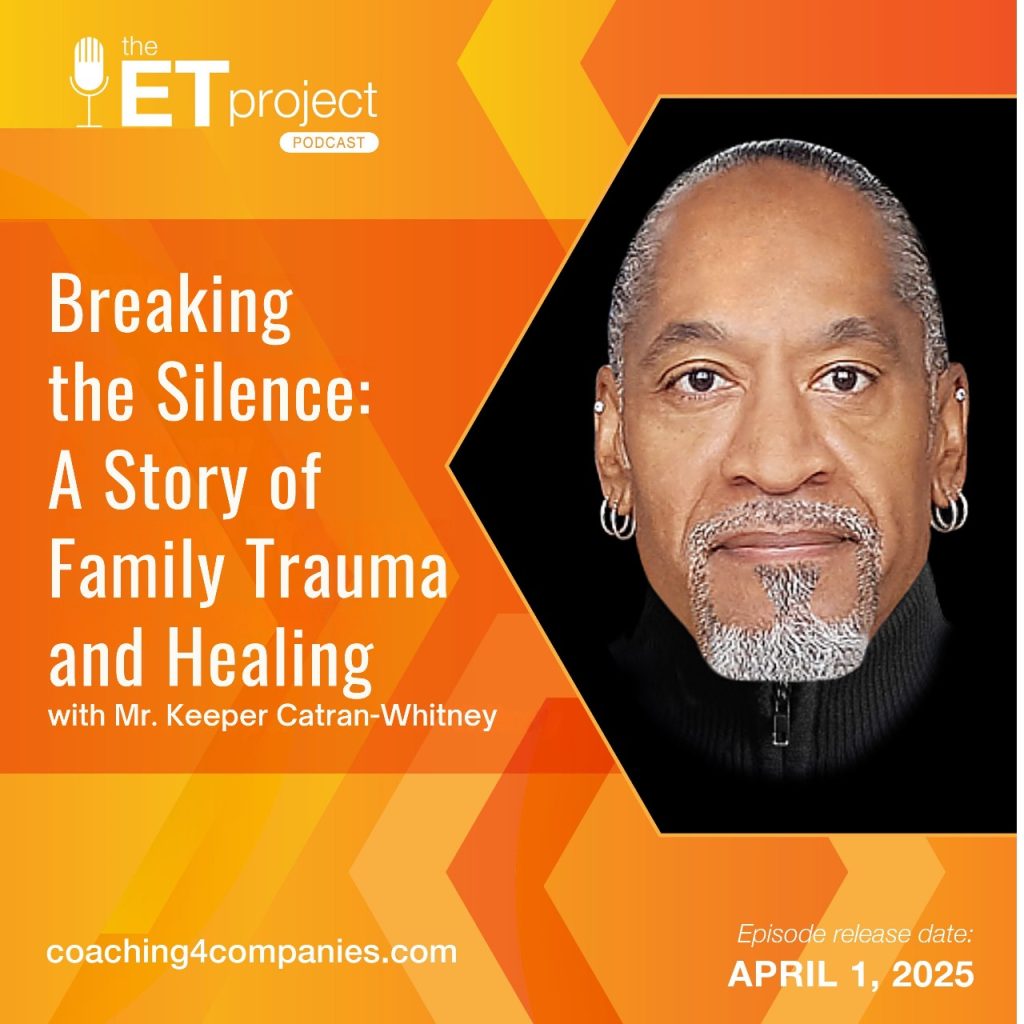
WAYNE BROWN: Hello, I’m your host Wayne Brown and welcome to the ET Project. We’re delighted to be delivering this podcast for executive talent all over the world whom we’re affectionately referring to as ‘Team ET.’ Today we’re journeying to Los Angeles to chat with Mr. Nick Whitney aka Keeper Catran-Whitney, the keeper of an incredible secret for decades and who has now shared the devastating story of family sexual abuse. Yet from the outside looking in, this was a blessed family with a musical gift that propelled them to national stardom as the band, The Whitneys. During this conversation, Keeper shares the real story that tormented he and his seven siblings throughout their childhood and adult lives. This is a deeply personal and traumatic journey and Keeper has captured the narrative in his book called ‘HELPLESSNESS’. Here are some of the stats about Keeper Catran-Whitney; born in 1958 in San Francisco, second of eight siblings and his father had 24 children in total. They grew up with frequent relocations due to evictions and unstable housing, living with incredible poverty much of their childhood. His formal education could be described as spotty at best but he has become a subject matter expert on sibling trauma through lived experience. He’s the creator of the podcast ‘This Is For The Brothers’ and author of ‘HELPLESSNESS’, the first book in a trilogy addressing brothers’ emotional and mental health challenges related to family sexual abuse. Today, Keeper is happily married to Patti with his two adult children and a golden German Shepherd named ODIN. Team, there’s learnings for all of us as leaders in this story and Keeper kindly shares some of the key insights and signals that we can be aware of with our teams and colleagues. This is not only a touching and deeply emotive conversation but also an important story that we all need to hear. So, with that let’s jump in and get ready to be informed.
INTRO: Welcome to the ET project, a podcast for those executive talents determined to release their true potential and create an impact. Join our veteran coach and mentor Wayne Brown as we unpack an exciting future together.
WAYNE BROWN: Hello team, welcome to today’s special podcast episode. Not only is it the beginning of a new quarter but I have a really exceptional guest for all of us to enjoy today. I’m really looking forward to our conversation. We’re going to explore the power of resilience; we’re going to look at the weight of silence and the journey toward healing. It really has highs and lows in this story and I think you’re going to find the conversation fascinating. I’m going to delve into what many from the outside would see as perhaps the dazzling heights of a renowned family and their music career but also look at the deeply personal challenging traumatic life that evolved or weaved its way through that period and the often-overlooked emotional struggles faced within the family in this case particularly by the family of brothers during sexual abuse with inside the family. We’re also going to look at how business leaders can foster awareness and support their own team where there may be a suspicion that similar situations exist. So, this conversation is all about courage, it’s about advocacy, it’s about turning pain into purpose. So, with that let’s dive in with our guest
Mr. Keeper Catran-Whitney. Keeper, a really warm welcome to the ET project, fantastic to have you here.
KEEPER CATRAN-WHITNEY: Wayne, thank you so much, I am honored. You are internationally known, and I’m talking about a renowned coach and it is an absolute honor to be here with you. Thanks for having me.
WAYNE BROWN: I’m humbled by that, thank you very much. Would you mind just starting with a little bit of a background about yourself and without going too deep just share a little bit of the journey that led you up to this point that you are?
KEEPER CATRAN-WHITNEY: Sure. I am the author of the multi-time award-winning book, ‘HELPLESSNESS,’ the emotional health challenges brothers experience once we learn our sisters have been sexually abused by our parents. I’m also now the finalist, author finalist, and I’ll know whether or not I actually win it in October. So, the book is doing really well. But to your point, before we even just get into that, as you’ve mentioned, we’re about to get into some very sensitive subjects here.
[00:05:00]
KEEPER CATRAN-WHITNEY: And I like to tell people right up front, if you need to back away, if this becomes a little too heavy for you, by all means, do so, I’m sure Wayne agrees. Definitely do that, Wayne will be here. Come back, take it in chunks if you have to. So that’s just to let you know. So, my story begins…my family, we were singers as you mentioned right off the top, Wayne. We were incredibly successful. We were on our way to absolute stardom and fame. Wayne, about a week or so out before signing the largest new artist contract offered by Motown Records by any group, me and my four brothers, we were somewhat blindsided by the news that my sisters had been sexually abused by my stepfather and with my mother’s knowledge. And so obviously that derailed everything, but what it did more than anything was the trauma that it caused for brothers, me and my three brothers, I have four sisters, was devastating because we were locked out of the conversation. We could no longer ask our sisters anything. And for brothers, which is my mission, elevating the voice of brothers in a space where we are not invited into. So, depending on where you want to go that’s just the really quick overview of it. But it’s how do brothers connect with their sisters and overcome the trauma that is after learning that your sisters have been sexually abused.
WAYNE BROWN: We probably might go to the depths of the raw information and I know your book, I had the opportunity to read much of it, your book covers this topic extremely well and so I’m not surprised to hear that the awards are flowing in. Maybe we start on the high as an opening and we look at the Whitney family band or the singing group, The Whitneys. Reading the book, it’s like a different world. It’s like a different life that you must have been living when you were the group compared to when you were living the life at home. So, let’s just talk about The Whitney singing journey for the moment, can you share a little bit about that and what was it like?
KEEPER CATRAN-WHITNEY: So, we’re talking about the early 1970s. I have four sisters and four brothers, my mother and stepfather, we could barely make ends meet, it was absolutely horrible. I went to 11 grade schools before I graduated high school. I lived in 21 different places, homeless three times. I had to go into the street to look for bottles to earn in to get a pound of ground beef or a bag of rice, that was my life growing up. And so, one day my mother, who was an absolutely brilliant singer, got together with her brother and her sister and they started singing. But as good as they were, Wayne, they just could not make enough money to make the ends meet. So, one day my mother hears us singing around the house and she says, “I have an idea. Would you kids like to sing?” Because as the singing family we could make more money. Well, of course, in ‘71 you’re talking about who doesn’t want to be The Jackson 5, I mean, going around the house singing “ABC,” “Who’s Loving You,” “I Want You Back.” I mean, that’s what we were doing all day, every day. And “what kid on the planet was it,” quite frankly. You know, when they just… everyone wanted to be there. Man, I remember Diana Ross introducing them on Ed Sullivan, that’s how well I know, it’s a story. So, the next thing you know, Wayne, we are singing in nightclubs all over Los Angeles, my God, because we were really good, we just didn’t know how much talent was in the house. So, one day, we are rehearsing and the phone rings. This is on a Saturday, because we only sang, we went to school, we rehearsed, we slept, and then we repeated, that’s what we did. Because we wanted out of a life of just rats and roaches and, you know, without belaboring the point, that that kind of life. So, the phone rings, and my mother answered me, she said, “Hello?” And she looks at us and goes, “Michael Jackson is on the phone.” He’s calling our house. And he wants to speak to the brother directly under me. Now, I’m the second oldest of us. So, my mother says, “he wants to talk to you.” And my brother runs over, “Hello? Hello? Hello?” Hangs up the phone and screams, “Michael Jackson said he has heard of us.” What? “He said for us to keep going. We’ll get there someday.” T his is 1971. And all of a sudden, he’s calling our house, Michael Jackson. Jump cut six years later, 1977, we are everywhere.
WAYNE BROWN: Yeah.
KEEPER CATRAN-WHITNEY: Concerts, TV, magazines, everything we touched turned to gold, Michael Jackson’s premonition for us had come to fruition.
WAYNE BROWN: Yeah.
[00:10:00]
KEEPER CATRAN-WHITNEY: In fact, we were about to sign with Motown. In ‘77, we made Billboard’s top 100 not once, but twice. And then later, we did it again. So, a week before signing this contract, my sister screams upstairs one day, the third oldest and the oldest girl, “boys come downstairs, family meeting.” We all come running downstairs. Oh, this is it, this is it, we are about to become rich, famous. Everything I could possibly wish for and just imagine was about to happen. I’m the last of the kids into the living room, and when I enter, I notice something pretty odd, my three younger sisters, the three youngest of us, they’re sitting in the far corner, okay? They’re not saying a word, which is really weird, because all they did was laugh and joke and talk and tease, just like, you know, what siblings did, right? But they weren’t saying a word. My two youngest brothers were at the other end of the couch and they were silent, but they were like me, they’re looking down at our sisters and are like, “what’s going on with them?” My oldest brother is standing directly behind my sister at the far end of the couch and we look at each other and I don’t know, it’s just supposed to be a joyous occasion, no more poor, no more going to the park to get powdered rice or rather powdered eggs and powdered milk, all that’s done, but something is out of play. Do I take my seat between my three youngest sisters and my two youngest brothers that I just sit and within seconds, my mother and my stepfather enter and immediately my stepfather sits down in his recliner and puts his hands over his face and does this. What the hell? Why is he covering his face with his hands? Is he sick? I don’t know. My mother walked into the sitting room and she turned around and looked at her eight kids, but she is looking daggers at them. More to the point, she is looking daggers at my four sisters. The oldest one, who I had not mentioned, is pacing back and forth in front of the archway leading into the living room. And if looks could kill, she would have killed her. I haven’t a clue what’s going on. Earlier that day, my sisters had been making a lot of noise, climbing doors and arguing like bees, you know, buzzing. My three brothers and I are about to hear the words no brother could ever prepare for, the words no brother ever imagined. My mother drops two of three emotional earthquakes on us. Number one, she said, “your stepfather has been molesting your sisters for years.” And I immediately become paralyzed. I’m under so much stress. I’m under so much trauma. I am dropping. The pressure is so hard, I’m unable to think about what I just heard, I only heard snippets. And then she said, earthquake number two, particularly after a pause since I live in Southern California, we have earthquakes all the time. In fact, we had two, so unsettling. She said, “I have known all along.” Wait, what did you say? You know what all along? When I am emotionally being pulled into this void of darkness, nothing is resting my descent, I am just dropping. And as I said, I’m pretty slow on the uptake. So, I’m just catching snippets. So, I’m hearing liquor store, I’m hearing apartment. I’m hearing park. Who? He did what? But as bad as all that was to hear, it was earthquake number three that came from my oldest sister that slammed me and my older brothers down, locked us down for 45 years. Within moments after my mother said what she said and me and my brothers are reeling, as I said, my sisters already knew because he had been molesting them for six years already. In fact, the year ‘71, we started singing, the year Michael Jackson called our house, he started molesting them. My oldest sister says, “you boys can’t talk about it. It didn’t happen to you. It only happened to us girls. You can’t talk about it ever.” And like that, we were dropped into what one military veteran told me, “You were just dropped into a war zone, and now you have to start making as a young man decisions that a sergeant has to make on the fly when there’s a lot of stress or a business person has to make when everything is falling apart. You have to make decisions.” And the trauma was a 45-year trauma. And what I have come to learn is there are no support systems for brothers, we have to figure things out on our own, we are left to our own devices. Even though there are tons of articles for women in magazines and books and documentaries and movies and the whole thing, there’s absolutely nothing for brothers. We’re at a point in our history where more and more men are talking about their personal sexual abuse.
[00:15:00]
KEEPER CATRAN-WHITNEY: But no one ever considers the impact on brothers when we’re left out of a conversation. And this is what I talk about, I elevate the voice so that we are brought into a conversation in which we are not asked to participate.
WAYNE BROWN: And what was your age at that time in ‘71?
KEEPER CATRAN-WHITNEY: At that time, I was probably 16, maybe 17. And it’s interesting that you asked that question because people will look at that and they will analyze 16, 17, there’s something that you could have done. Well, as anyone will tell you, when you are hit with such emotional trauma, you are paralyzed. You don’t know what to do. In fact, when adults hear it, they don’t know what to do, you’re just stuck. So that’s when me and my brothers found ourselves stuck, not knowing where to go.
WAYNE BROWN: And your book does a great job of taking us through the journey from when you were five years old all the way through, what you didn’t mention then was, in the book you talk about how the size of your stepfather, he was a big guy, he was intimidating from that perspective in your mind, right?
KEEPER CATRAN-WHITNEY: Yes, there was no question he was intimidating. Me and my seven brothers and sisters, my mother had the first of us when she was 16. And by the time she was 24, she had all eight of us. So, we are eight years apart. As I told my mother once, one time I said, “you spent eight years on your back, that’s all you did.” And her response to me was, “baby, I never had a headache.” So, she marries my stepfather because, as I said, what I had to say, we left my dad because he was incredibly abusive, he was an absolute terror, he was a legendary… And so, my mother left him and brought all of us down to Los Angeles where she met my stepdaddy, who was 6′ 6″, 250 pounds and he wore a massive afro weight that put his height at seven feet tall. And he was a mountain of a man. And at that time, I was maybe 5′ 7″, 5′ 8″, 145, 150 pounds. So, he was almost a foot taller and 100 pounds heavier. And so, yeah, you’re right, he was an incredibly imposing figure.
WAYNE BROWN: Now, in terms of the group, and you didn’t sign the contract, of course, but the group stayed singing for some time, if I’m correct?
KEEPER CATRAN-WHITNEY: Some of us did. A couple of my sisters, they left. And at this point, my family, everything I had believed my family to be, Wayne, was on the living room floor in shambles, it was broken.
WAYNE BROWN: Yeah
KEEPER CATRAN-WHITNEY: And it looked like there was no way we were ever going to put this back together. So, to your point, a couple of my sisters left, one of my brothers left. And the challenge for us was this, yes, we were on the verge of signing this contract with Motown, but we were with United Artists Records at the time. And we couldn’t just say, “we’re gone,” because we owed them over a quarter of a million dollars for just the album alone. And we owed the money, maybe another 100,000 for just other things that they had invested in us. And so, we have to pay them back. And so, some of us realized that, okay, we have to keep going. Even though we’re under a lot of stress, there are people within the group who aren’t talking to each other, but we understand the state. Because another thing that was going on, United Artists, the home that we were staying in, they were paying for it. They were paying for our food, they were paying for our clothing, they were paying our bills, so, if we just ended all that right now, and trust me, many of us wanted to end it right then and there, we would have been back on the streets again.
WAYNE BROWN: It’s always fascinating to me to look behind the curtain of people’s charade or the real world for all of us, when we all have a different life internally than what we live externally, or not all, maybe not the majority. And it’s always so interesting to see on the outside what looked like a hugely polished, accomplished family singing, you know, the world was at your feet, and yet all this turmoil, trauma was going on on a daily basis behind the scenes.
[00:20:00]
KEEPER CATRAN-WHITNEY: We had a number of friends. I mean, there are people to this day who are just now learning about what took place in our family, I kid you not. One of our best friends who came to see us every day from the time we first started singing in nightclubs to the time we ended, called me the other day and he said, “Dude, I had no idea. In fact, I even dated your sister when all this was going on.” I said, “Yeah.” He said, “How is it that we did not know any of this?” For us, the show was always on. We knew, as the saying goes, what side our bread was buttered on. If we were going to continue to eat, we needed to keep smiling. We needed to keep making it look as though everything was normal. Our thing was so good. Many of our friends wanted to be in our family. They would tell us… Wayne, they’d say, “I want to be in your family because your family is so cool.” And we’re like, “No, you don’t.” You know, what you’re talking about, there is the life that we present in public and then there’s a life that takes place within the four walls of your home. And oftentimes, there’s another phrase that people tend to think what is going to break you down, either from a family standpoint, even from a business standpoint, is usually not what happens outside, it’s what happens inside that you have to look out for. And me and my brothers had absolutely no idea all that was going on.
WAYNE BROWN: And I think it’s important also to share that one of the reasons why clinging to that impressive lifestyle in the eyes of other people was because of the deep, not only the sexual abuse, but also the poverty that you grew up in, right?
KEEPER CATRAN-WHITNEY: Yeah.
WAYNE BROWN: Weighing that very deeply in the book as well. So, you came from that environment of absolutely nothing, to having this potential opportunity. And so, to sort of forego that would have been a really big challenge at that time, I can well imagine.
KEEPER CATRAN-WHITNEY: No question about it, you know, imagine, you know, for your listeners and your viewers, you are going from house to house to house every year, from Los Angeles to Oregon to Washington State and back over and back, you know, it’s just this constant movement. And you’re living amongst, you know, the rats and the roaches and windows that don’t have any glass in them, you don’t have heat. You don’t know what’s going on, you’re just surviving from day to day. And you have this tremendous opportunity in front of you. And as children, as kids, the carrot is, if you keep going, we can get out of here. We had our dreams and aspirations that were so central to us wanting to try to keep making things going. But we also had the carrot being constantly held out in front of us by our mother and our stepfather and that’s essentially what kept my sisters quiet for all those years, “if you say something, the group is going to fall apart. If you say something, we’re going to hurt your brothers. If you say something, I’m going to do this.”
WAYNE BROWN: Yeah
KEEPER CATRAN-WHITNEY: And so, there was this constant battle. An interesting part of the story is my sisters were sexually abused starting in 1971. It went on for almost 15 years. Six years before then, in 1965, my older brother and I were sexually abused by our babysitter almost daily for six months. I bring that up to say this, I understand both sides, because oftentimes I’m hit with, “Keeper, you don’t understand what it’s like for a woman because you’re a guy, you’ve never experienced it.” Well, I do understand it, because as a little boy, as I said, I was sexually abused by our babysitter. And so, I understand both sides of the sexual abuse coin, which is the damage side and the collateral damage side. It’s not something I’m proud to say. And it took me a long time to understand that I was sexually abused because I didn’t identify that as that until maybe 10 years ago, because I was just in this denial phase until my wife made me look at what was really happening to me. The trauma, I understand all of it very, very well.
WAYNE BROWN: I’m often amazed, the degree of resilience that humans have the capacity to fight. And I don’t want to glorify it, because there’s the trauma that leads to that point.
KEEPER CATRAN-WHITNEY: Mm-hmm
[00:25:00]
WAYNE BROWN: But if I look at you now and I look at where you are and everything in your life today, the amount of resilience that you have demonstrated along that journey is nothing short of remarkable. I’m guessing at the time, was it evident that you were so resilient, or was it a case of survival?
KEEPER CATRAN-WHITNEY: It was purely a case of survival. If I were to say, “yes, I recognized it,” I would be so disingenuous. I would just be trying to tap myself on the back foot. It was about survival, as it so often is, when you’re in the middle of the turmoil, you don’t recognize it until you are able to take a step back years later and have the 20/20 vision and say, “wow, that’s what was really going on there, it was resilience, it was about the need to find a way to eat.” But at the end of the day, when I found the courage to talk to my sisters, which took 45 years, I understood then I was going to have to somehow come up with a way to be resilient, because I was expecting them to just slam me down. So, there’s a lot of courage that takes place in that environment. You have to figure out a way to have clarity of thought and action. If you’re going to find your way out of it, you have to figure out a way to be determined and have resolve when there’s nothing in your past that tells you you have what’s necessary. There was nothing in my past that said, “I have the guts to do this.” But it goes back to what you said. It’s about resolve and then rather it’s about the resilience of it all. Because while you’re constantly making these decisions about what you’re going to do next, you’re constantly weighing the risk-reward factor to all of it. And you have to be responsible for whatever comes next, and so, the risk and the consequences that happens based on the actions that you choose are vital to the success. And where everyone else chose not to act, I eventually found what I needed to act and save my sister. But it wasn’t easy and it didn’t happen overnight, it happened over years.
WAYNE BROWN: And I want to leverage that story because you’re talking about now the end outcome, but you also share the story where you confronted your stepfather. Would you mind reliving that moment with us if it’s not too painful?
KEEPER CATRAN-WHITNEY: It’s interesting that you say, well, I might relive in it. I would say in the past 12 months, I have done over 200 interviews. So yeah, I’m used to reliving it by now. So, it took me nine years to do something because during those nine years, Wayne, my mother kept telling us, “I will handle it, I will handle it, I will handle it.” But she never did. And so, I’m about three months away from getting married, in 1986. My mother is about image. And as long as her image is being satisfied, she will do what’s necessary. So, what did she end up doing? After we got my stepfather out of the house, she brought him back in. We’d kick him out of the house, she’d bring him back in. So, in ‘86, as I said, I’m about to get married in November. And he’s back at the house with my sisters, three of them are still there. And I’m having a hard time with them because I can’t see myself getting married and leaving them alone, I just can’t. I mean, I had already taken too long. I was already beating myself up for taking years. But the years were about, you said I couldn’t talk to you guys, so, we just wrapped away, but we’ve been wanting to speak to you. So, on a Saturday, about three months out, I told my fiancé, “I have to go to the house. I’ve got to handle something.” And she said to me, “what is it?” I said, “well, you know, I got to take care of something.” And she said, “well, I’ll see you tomorrow.” And I said, “I hope so.” And she got really nervous. But I went to the house because I still kept the bedroom at my family’s house. It was upstairs. In fact, there were only two bedrooms upstairs, my bedroom and my mother and my stepfather’s bedroom. But I had determined it was time for him to be done in one way or the other. One of us was going to die. I didn’t tell my fiancé what I was about to do. In fact, I didn’t tell anyone that I was getting ready to kill him, that’s what going to the house was all about. I go into my bedroom, Wayne, and I pace back and forth two hours. It’s a cool day. I open the windows and I am sweating profusely because I know what I’m about to do. The instrument of his death is resting against the door jamb of my bedroom door.
[00:30:00]
KEEPER CATRAN-WHITNEY: I’m about to bludgeon him. And so, I spent two hours going back and forth. And I’m sweating and I lie on the bed. At some point, I started trying to talk myself out of it. But then I’d remember my sister, their faces, their pony tails, their smiles, their little blue dresses with the flowers on them, which would pop into my imagination. I’d say, “okay, I got to do this for them.” After a couple of hours, I hear my mother and my stepfather’s door open and I stood up. I describe it in a lot more detail in the book, as you know. But what I did, I opened the bedroom door and I peeked out and there he was walking down the hall towards the stairs. My bedroom door was right at the landing at the top of the stairs. And so, I step out and he sees me, like I said, he’s a mountain of a man and I’m so scared. But I have satisfied myself in the knowledge that one of us was going to die. If I died, I’d be okay. Because if he killed me, he’s going to jail for life, for murder. If I kill him, he’s dead, but I’m going to jail for life. In fact, I’m going to have to suffer the death penalty. But it’s okay because he’s out of their life, you talk about stupid thinking, because that only would have made my sisters’ thinking… Their emotional challenge even worse. But he sees me as I open the door and I step out and I walk toward him and we meet in the center of the hall, and in the center of the hall, Wayne, it is this very short wall that overlooks the stairwell. And I know if I’m standing in the wrong place, all he needs to do is push me and I go tumbling backward, hit the floor, snap my neck, I’m dead, that’s the one place I cannot be, that was job one. But when we meet, I screwed it up, I mean, I literally fucked it up, I am right in the spot I’m not supposed to be with my back to the short wall, and now I’m shaking. Not so much because of him, but because I know what he could easily do with one finger.
WAYNE BROWN: Yeah
KEEPER CATRAN-WHITNEY: So, I start to think really quickly, I’ve got to twist him around, and I was able to do it. And as he was initially walking toward me, he was all smiles and he thought everything was really okay. But when we got face to face, or he would bury my face to his chest, because I couldn’t look over his shoulder, he was that much larger than me, he recognizes that something is wrong. And he looks down at me and it’s like this comprehension is dawning over his face. Like, “Oh, it’s about to happen.” It’s like, he’s been waiting for one of us boy to do something. So, my face is at his chest and I look up, what I call ‘the side of a mountain,’ and I tell him, “you’ve got 24 hours to leave this house. If you’re still here by this time tomorrow, you will be dead because I will have killed you.” I turn around and I walked back to my bedroom and I closed the door, waiting for him to come through and I hear footsteps and I back into the bedroom. I have the bat in my hand, okay, well, this is going to be like another softball game, not a problem, we’re about to hit another home run, easy-peasy, I just need to swing a little higher, that’s where he’s headed. I’m hearing the footsteps, as I said, but after a minute, after a few seconds rather, they start to fade. And I realized, oh, he’s going back to the bedroom, take a deep breath. Okay, he’s not coming for me. Which is really weird because he was always aggressive toward us. If we made any kind of stand toward him, he would physically try to take advantage of it because he was so much bigger than all of us. But this time he walked back to the bedroom. I heard him close the door and I opened my door and looked out, sure enough. I decided to walk downstairs, get into my little Fiat X1/9 and drive to my fiancé’s, apartment. And she said to me, “are you okay?” I said, “I won’t know until tomorrow,” because I gave him 24 hours, right? I go back to the house the next day, bat in hand. And I walk up the walkway, walk up the stairs and at the last second, I decided to leave the bat outside. I have no idea why, but I did. Maybe it’s just because I didn’t want to agitate a situation that’s already incredibly agitated, but I’m expecting when I opened the door for him to be standing there with his silver 45 pointing directly in my face. And I’m still okay with it if he killed me because he’s going to jail for murder. Once again, not thinking about the emotional outcome for my sister and my brother and my fiancé. It never even crossed my mind what their reaction was going to be if I ended up being dead.
[00:35:00]
KEEPER CATRAN-WHITNEY: Just blinded by rage because I’m a brother looking for retribution. Finally, I had just gone to this really, really dark place. I’m in this mental place because my emotional trauma could not be satisfied. I couldn’t get the emotional support that I needed. I’m in this real bad mental place. So, I walk into the house and he’s not there. I go to the back of the room where we have a little studio and I speak to my younger brother and he says, “he is gone, he left, he left yesterday, last night after you left and he has not been back.” And that was that. But it was a situation where I had to weigh the risk of everything, not just my life, but I had to weigh the outcomes for everyone. As I said, I didn’t do it clearly because I didn’t take into account what they were going to have to deal with. But for me, the consequences were good enough. And so, as I had mentioned earlier, when we started, this military guy saying, you’re like in a war zone. And he said, it’s very much like what business people have to do, they don’t look at the people that are with trauma as people that are having to navigate the same type of trauma and make the same kind of decision that business leaders have to make. The fact that business leaders, if you’re running a business, you are kind of in a war zone. You’re trying to figure out and balance out everything. And so, I did it and it kind of set some things okay for the immediate. But three months later, I screwed up. I screwed up royally. I set everything back almost to square one. The wedding is going to happen in November, I want to try to have some sort of reconciliation with my mother, I want to try to have some kind of relationship as children do. You try to figure out a way because we’re so attached emotionally to our parents, usually for the good, but sometimes for the bad. And here I am thinking, “okay, let me do this.” And I talked to my fiancé. I know my mom is all about image and we’ve got music people coming. We’ve got entertainers, famous entertainers coming. And it’s the Whitney family, one of them is getting married. So, I said, “I’m going to tell my mom if she wants to invite him, she can, but I know it’s going to be okay because she’s going to say, no. I know she’s going to say no this time.” And my fiancé agreed. She said, “okay, let’s see what happens.” So, I go to my mom about a week before our wedding and I said, “look, understand this, I do not want him there.” And this would be handing on an olive branch, I’m trying to make things okay for us because I know I’m going to have some kids and I want them to know her for better or for worse. And so, I said, “he’s not invited, but if you want to invite him, you can, but know that we do not want him, period.” So, I figured, okay, I did something good. I did something nice. And she’s going to finally say, no, she’s finally going to represent her children. And then she said the one thing I did not expect. She said, “let me think about it.” And I knew in that moment I had betrayed my sister. The brother who saved them was responsible for putting him back in front of them in our wedding. I thought I had mended, I thought I had made things okay with me and my sisters and my brothers that we could finally start to develop a relationship, but what that did was destroy everything, it is the greatest regret of my life. And it is oftentimes as humans, we make a decision that we believe to be the best for everybody. It doesn’t always work out that way, I was thinking that we’re going to be able to somehow come together because I’m making this overture to my mother. She’s going to tell him, “No,” she’s not even going to invite him. But she did the complete opposite and at that point my sisters wanted absolutely nothing to do with me. But I was able to surmount that 45 years later, it took a long time.
WAYNE BROWN: I’m suspecting that many of our listeners won’t be able to fully grasp the whole ripple effect that comes from the family sexual abuse.
[00:40:00]
KEEPER CATRAN-WHITNEY: Yeah
WAYNE BROWN: What’s the message that you would like them to take away from our conversation, from hearing your story?
KEEPER CATRAN-WHITNEY: We got into some more personal things, which is always great. I’m always happy to talk about it. My mission, Wayne, is to, if you could take a step back and look at me as a brother, who for years was trying to figure out a way to reconnect with his sister, who had told him, you cannot talk about it, you cannot come to us, you cannot get anything because what they were, what they represented for me and my brothers was our healing. They were the ones who could tell us what was going on and get us on the path to healing, but we were turned away. So, if your listeners can imagine what must it be like for a brother to hear what we heard and try to figure out and navigate a way to get to their sister. For me, there’s this loss of self-esteem because of all the shock and the guilt and the shame and the betrayal and all of it, which brothers, we all go through, we all carry this weight in silence. A 96-year-old father-in-law who just passed away five years ago, a white Jewish guy out of New York is a great example of carrying a burden around a story like this for 80 years with no one to talk to. So, the takeaway that I would like people to consider, what trauma is a brother going through? What are they holding that they cannot express? Because without that level of expression, we go into a very dark place. We need to have an outlet. Certainly, here in the United States, there are no outlets for brothers. There are no conversations. There are no 12-step programs, not even a one-step program. What I look to do is create a conversation to get people to be aware additionally of what brothers carry and understand that certainly if you’re a sister, that your brothers need to talk to you, because often times women could talk to other women. Guys, are we going to talk to other guys about this? Hell no. And we’ve got to get over that. We’ve got to figure out a way individually of learning how to express ourselves. And then we also have to be able to, as brothers and men, help other brothers express themselves emotionally in a way that’s safe for them.
WAYNE BROWN: I can imagine, Keeper, as you reflect back over that period in your life, you’ve probably asked yourself the question multiple times, what were the signs and why didn’t you pick them up yourself?
KEEPER CATRAN-WHITNEY: What were the signs indeed? My mother and stepfather had so thoroughly shut my sisters down from saying anything, but there were signs. And I did not realize the signs until about eight years ago when I was talking to my sister, interviewing one of my sisters for the podcast. And this was the sign that I completely missed, there were times after… rather leading up to all of this that my brothers and I, we would laugh and joke with our sisters and their reaction to what we were talking about was completely inappropriate, it didn’t make any sense. For instance, let me just give you, if we’re talking about apples, let’s just pull out a bunch of apples and then they started talking about oranges, something is wrong. And so, we would joke with our sisters, we would talk about something and their reaction was… it did not match, that’s a sign.
WAYNE BROWN: Yeah.
KEEPER CATRAN-WHITNEY: Or they didn’t want to go to school or they didn’t want anything when we’re performing, this was possibly the biggest sign, they did not want to sing on the side of the stage where my stepdad was playing. I didn’t know, I just thought they were being the girl, but as I look back on it, that was a sign. And you have to look at things, but it’s really hard, as you said earlier, when you’re in the middle of it, you miss a lot of it. And looking back at it, we’re doing more and more podcasts and actually writing a book, I was just so upset with myself because I realized I blew it, the signs were there, things that should normally happen or reactions that should normally happen when they don’t match, that’s the time to start asking the question, what’s going on there? Why is she doing that? Why is she acting like that? Why is he doing that? There’s something wrong. And then we have to be able to find the courage to go ask them, “look, can I ask you something? Are you okay? Do you need to talk? Is there anything I can do?” Because without asking those questions, we can’t even begin to get to the heart of the matter. And so, those are the signs that I completely missed.
WAYNE BROWN: Then there’s also a takeaway there for us as leaders with our teams, we need to be more observant, we need to be aware that we do have this facade we bring to our job.
[00:45:00]
KEEPER CATRAN-WHITNEY: Yeah
WAYNE BROWN: Maybe concealing a whole raft of negativity that’s going on in their life that we don’t have an awareness about.
KEEPER CATRAN-WHITNEY: It’s not always that the job is what’s weighing them down, it’s probably what they’re bringing from home that’s weighing them down that has got them so emotionally off balance. And you may ask them to do something and they’re just not cooperative, they’re just not willing to do something that you want. I have found that it’s usually not the job itself, it’s what comes to the job from outside the job that is the biggest challenge.
WAYNE BROWN: Keeper, we’re out of time, but the book is titled ‘HELPLESSNESS,’ where’s the best place for people to be able to purchase?
KEEPER CATRAN-WHITNEY: The best place that people can purchase it is Amazon. They can get it in a soft cover, they can get it as a Kindle or a download, that is the best place.
WAYNE BROWN: Well, congratulations on the book. I know it is a large book, 500-plus pages, it’s a grueling book to read through, it’s extremely emotive.
KEEPER CATRAN-WHITNEY: Well, ‘HELPLESSNESS’ is book one of a three-book series. There’s ‘HELPLESSNESS,’ I’m now writing ‘HOPEFULNESS,’ how do you find a way out? How does hope keep you going? And then the last book is ‘HAPPINESS,’ which is where I’m at right now. How did I go from helplessness to hopefulness to happiness? So, it is a journey for a brother.
WAYNE BROWN: Thank you for sharing the story, thank you for bringing it to everyone’s attention.
KEEPER CATRAN-WHITNEY: Thank you, Wayne.
WAYNE BROWN: It has been a pleasure, Keeper, and I look forward to staying in contact.
OUTRO: Thank you for joining us on the ET project, a show for executive talent development, until next time, check out our site for free videos, eBooks, webinars, and blogs at ‘coaching4companies.com.’
[END OF TRANSCRIPT]